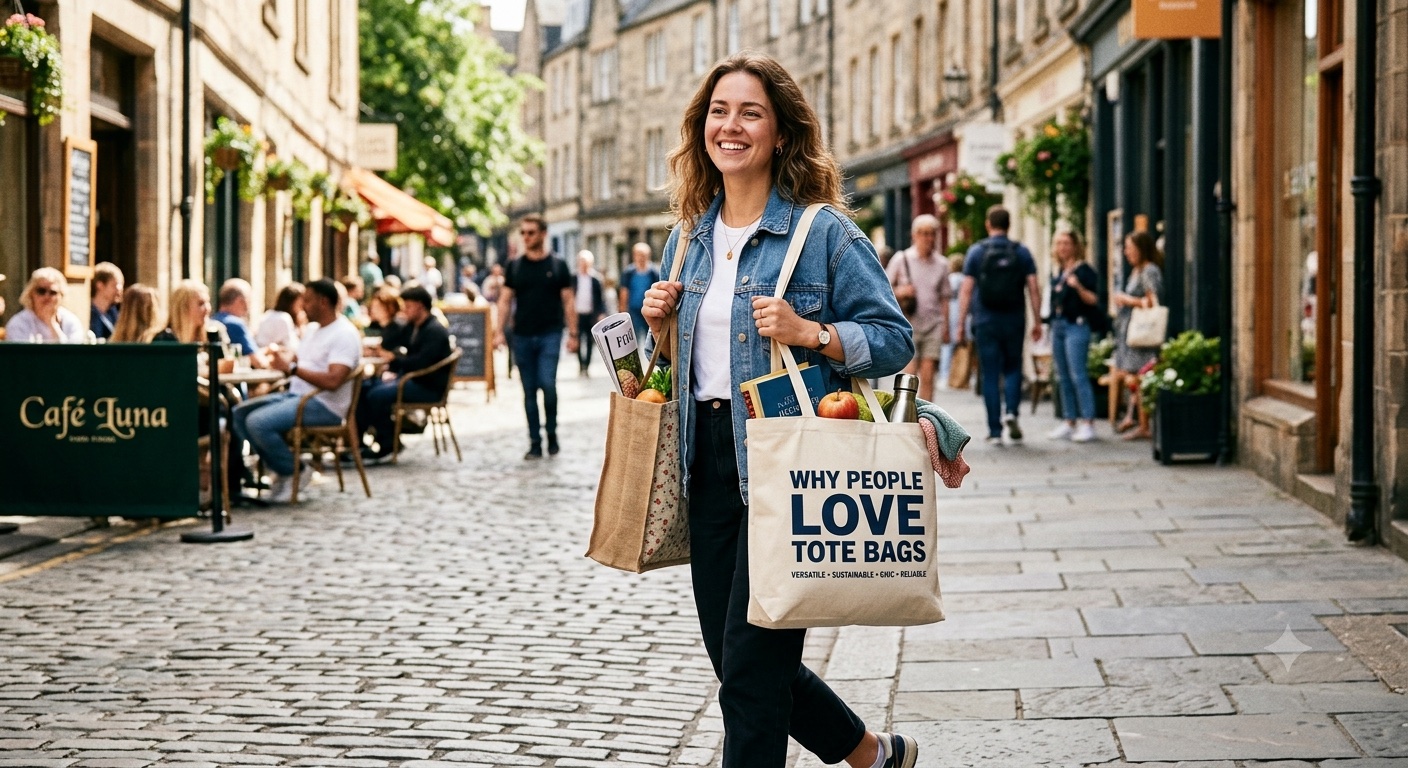
Tote bags have become one of the most beloved bag styles of the last few decades. Walk into any coffee shop, farmers market, or office, and you’re bound to spot at least one tote bag slung over a shoulder. What started as a simple, utilitarian carryall has evolved into a versatile everyday accessory that combines practicality with timeless style. Here is why totes have earned such a devoted following.
They are endlessly practical
A good tote bag is basically a blank canvas for your day. Wide open tops mean you can toss things in without fumbling for zippers, and the boxy shape makes it easy to fit groceries, laptops, gym clothes, or a stack of books all at once. There is no wrong way to pack one, which is part of the appeal.
They fit almost any lifestyle
Students use them to haul textbooks across campus. Parents use them as diaper bags in disguise. Professionals use them instead of a briefcase. Beachgoers use them for towels and sunscreen. Few bag styles flex across that many use cases without ever feeling out of place.
They have become a canvas for self-expression
Once a purely functional item, totes are now a genuine style statement. Museums, bookstores, bands, and independent artists all sell branded totes, turning them into a quiet way to signal taste and interests. A canvas tote with the right slogan or design can say more about someone than an entire outfit.
They are a small, easy sustainability win
With plastic bag bans and fees becoming more common, reusable totes have become a go-to alternative. They are sturdy enough to be used hundreds of times, which makes them an easy, low-effort way to cut down on single-use plastic without changing much else about daily life.
They are affordable and often free
Unlike many bag styles, totes are frequently given away at conferences, book fairs, and store openings, or sold cheaply as blank canvases people can customize themselves. That accessibility means almost everyone ends up owning a few, and many people end up genuinely loving the ones that fit their life best.
Simple, sturdy, and endlessly useful, it is easy to see why the humble tote bag has held onto its popularity for so long — and why it shows no signs of going anywhere.