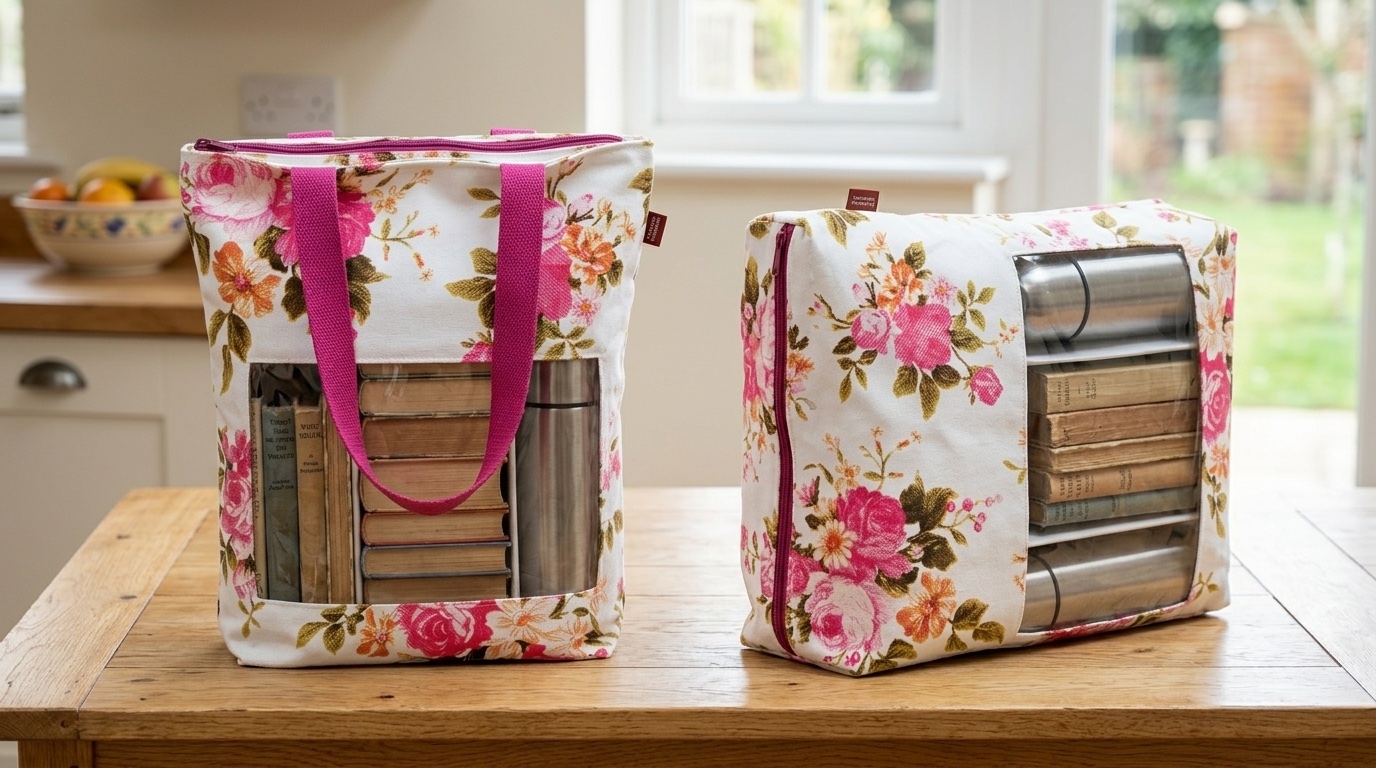
If you've ever had a tote bag tip over on the bus, or watched your phone slide out while reaching for something at the bottom, you already know the problem with open totes. They're great for a quick grocery run, but the moment your bag is jostled, tilted, or set down on its side, everything inside is one bump away from spilling out.
The case for open totes
Open totes have their place. They're fast — no fumbling with a zipper when your hands are full of produce or your kid's backpack. They're also a little more breathable for beach days, when you want sand and water to shake out rather than get trapped inside. If you're using a tote purely as a carry-in, set-down-immediately kind of bag, open works fine.
Where a zipper actually earns its place
The moment your tote leaves your side — on a bus, in a shopping cart, slung over the back of a chair at a coffee shop — a zipper stops being a nice-to-have. It's the difference between a bag you can toss around without thinking and one you have to watch constantly. A zippered tote also handles travel far better: overhead bins, checked luggage, and the bottom of a backpack are all places where an open tote will happily donate its contents to whatever's around it.
There's a security angle too. Wallets, phones, and passports sitting in an open tote are visible and reachable to anyone standing near you, which is exactly the situation you don't want in a crowded market or transit station. Zip it shut, and that risk mostly disappears.
The verdict
Open totes are fine for short, low-stakes trips where speed matters more than security. But if your tote is going to double as a daily bag — commuting, traveling, running errands where you're in and out of the car — the zipper isn't a minor feature, it's the thing that makes the bag actually reliable. That's why every tote in our shop comes with a zipper closure: we'd rather you trust the bag with your everyday stuff than baby it.